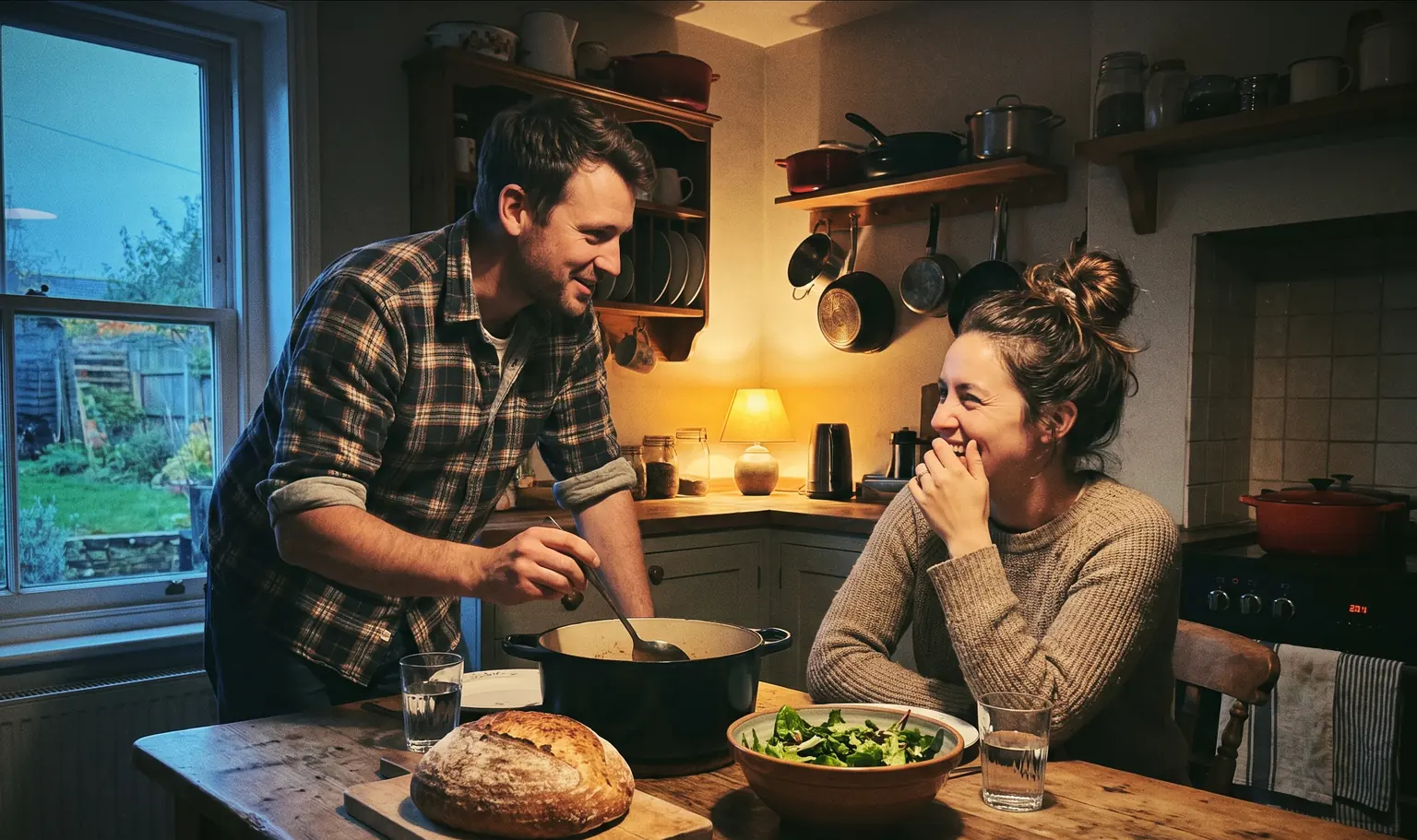
Talk about small, specific things you are actually curious about, and then follow up. A first date isn’t an interview and it isn’t a performance. It is two people finding out whether an evening together is easy, and the easiest evenings are built from good follow-up questions, not from a list. Start light, share about as much as you ask, and keep the heavy subjects for a later evening.
Start small, and specific
The first ten minutes are for settling in, and small talk does that job well, as long as it is specific. “How was your week?” gets “Busy.” “What was the best part of your week?” gets a story.
Look for something you can both see or share: the place you’re in, the way each of you got there, what you ordered. The point isn’t the topic. It’s to get a first exchange going in which each of you says something real and the other picks it up.

Follow up more than you ask
The most useful habit on a first date is the follow-up question. When someone tells you they spent the weekend fixing a bike, the next question isn’t about their job. It is “What was wrong with it?” or “Do you ride a lot?”
Follow-ups show you were listening, and being listened to is a large part of what makes an evening feel good. They also take the pressure off both of you: you don’t need a stock of clever questions if you are curious about the answers to the simple ones.
Share as much as you ask
A first date that is all questions in one direction feels like a job interview, and the person asking ends up as unknown as when they arrived. Answer what you are asked, properly, and offer something of your own when there’s a natural gap.
There’s research behind the instinct. In a well-known 1997 study, Arthur Aron and colleagues paired strangers to take turns answering questions that grew gradually more personal for about 45 minutes, and those pairs reported feeling closer than pairs who made small talk. The authors were careful about what it showed: closeness in the moment, not love or commitment. But the shape is useful for any first evening: take turns, and let it deepen gradually.
Questions worth asking
These are starting points, not a script. Use one or two, and let the answers lead.
Вопросы для застолья
- What did you do last weekend that you'd do again?
- Where would you take a visitor on their first evening here?
- What's something you changed your mind about in the last few years?
- What are you reading, watching or listening to that you'd recommend?
- What did you want to be when you were ten?
- What's a meal you still think about?
- What does a good Sunday look like for you?
- Is there something you're learning at the moment?
The easiest evenings are built from good follow-up questions, not from a list.
What to keep for later
Some subjects aren’t off limits, just early. On a first evening, keep them short if they come up, and come back to them when you know each other better.
- Exes, in detail. It’s fine to say you were married, or that a long relationship ended. A blow-by-blow account is for much later, if ever.
- Money, specifically. What someone does is fair. What they earn isn’t first-date conversation.
- The long-term plan as a checklist. It’s good to be clear about what you’re looking for, and saying it early is part of dating with intention. Interviewing the other person about children, cities and timelines over dessert is something else.
- Health and hard times. If they come up, listen. Don’t dig.
None of this means pretending. If something important is part of your life, it’s fine to mention it simply and move on. You’re not hiding it; you’re pacing it.
If you’re nervous
Most people are, and saying so helps. “I’m a little nervous, it’s been a while” is a good first sentence, because it’s true and because it gives the other person permission to be nervous too.
A few practical things help more than any technique. Arrive a few minutes early, so you’re settled when they walk in. Choose a place you know, with a table where you can hear each other. Eat something beforehand if you tend to forget to when you’re anxious. And remember that the other person is not an examiner: they are hoping it goes well as much as you are.
Why you’re dating again
If you’re dating after a divorce or a long relationship, it will probably come up, and it helps to have a short, honest version ready. Two or three sentences: what happened, in the plainest terms, and where you are now. “I was married for twelve years. We separated two years ago, and I’m ready to meet someone.” Then turn the conversation back to the person in front of you.
The short version isn’t a cover story. It’s the right size for a first evening. If the relationship goes on, there will be time for the long one. Our guide on dating after a divorce has more on knowing when you’re ready.
When it goes quiet
Silences happen, and they’re shorter than they feel. Don’t rush to fill one with a new topic. Go back to something they said earlier, “You mentioned you’d just moved. What made you choose this neighbourhood?”, and the conversation usually picks up where it left off.
If the silences keep coming, that’s information too. Not every first date should become a second, and an evening that never quite caught fire is still an evening well spent if you were both kind.
How to end it
End while it’s still going well, if you can. And if the second evening is at home, our guide to dinner made ahead keeps you at the table, not the stove. Say something true and simple: “I’ve really enjoyed this.” If you’d like to see them again, say that too, plainly. If you’re not sure, it’s fine to say goodnight warmly and decide later.
What to do the day after is its own subject. For the first evening as a whole, from planning to the follow-up, read our calmer guide to first dates.
If you’d like to think about what you’re looking for before the next first date, the Pulse is a short questionnaire that draws a portrait of you.